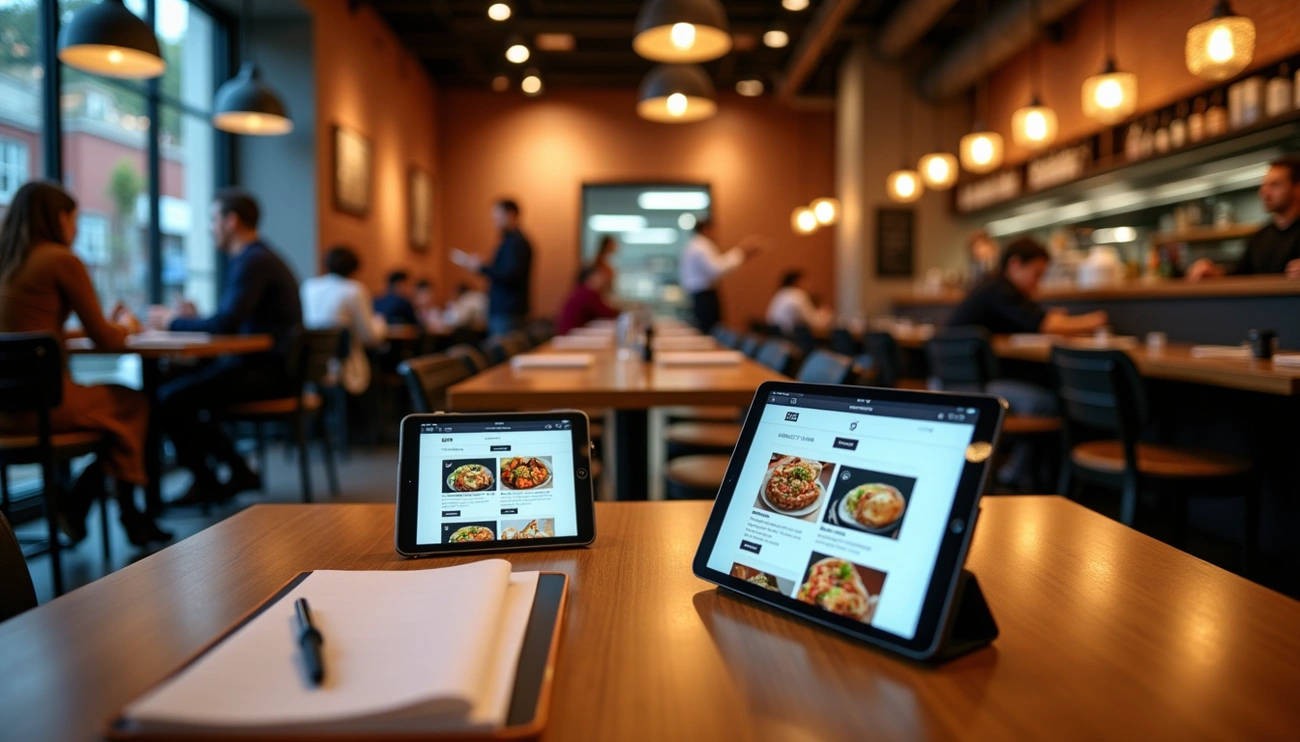
Will having a website actually bring more customers to my physical store?
 The rivalry between e-commerce and brick and mortar isn’t what many retailers think. A new physical store boosts overall traffic to a retailer’s website by 37% on average. This powerful connection hasn’t stopped many store owners from facing tough times. Their site traffic has dropped anywhere from 15% to half in the last year.
The retail world keeps changing in surprising ways. Target’s weekly foot traffic has decreased by up to 8.8% compared to last year. However, digital marketing strategies and physical locations work together instead of competing. Brands with physical stores see their digital sales climb by almost 7%. On top of that, a survey shows 56% of consumers prefer to check items in-store before making online purchases. Most shoppers either buy exclusively in stores (53%) or mix both online and in-store shopping (31%).
This piece will show you how websites and physical stores can create smooth customer experiences together. You’ll learn about common behaviors like “webrooming” – where customers research products online before buying them in stores. We’ll also give you practical steps to turn your website into a powerful tool that drives more customers to your retail location.
Why physical stores are seeing less foot traffic

Image Source: Resonai
Physical stores have seen their customer foot traffic steadily drop over the last several years. Placer.ai reports that foot traffic stayed down by 8.1% in March 2023 compared to pre-pandemic levels in March 2019 [1]. This drop shows a basic change in how people shop, and retailers must understand this to survive.
The rise of e-commerce and mobile shopping
E-commerce’s explosive growth has changed retail completely. U.S. e-commerce sales topped USD 1.00 trillion in 2022 for the first time [1]. Online shopping now takes up much more of consumer spending. The numbers tell the story – online sales jumped from 6.6% of all retail in Q4 2014 to 16.4% by Q4 2024 [2].
Mobile technology plays a key role in this change. About 45% of shoppers use their phones to compare prices in stores, and 65% have downloaded retailer apps [3]. People can now shop anywhere and anytime, which has changed what they expect from stores.
Mobile shopping keeps growing fast. It generated over USD 491 billion in the U.S. in 2023 and could reach USD 856 billion by 2027 [4]. People’s ability to browse, compare and buy on the go has changed how they interact with stores.
How does online shopping affect retail stores?
Online shopping affects traditional retail in several ways:
-
Employment effects: A new e-commerce fulfillment center cuts retail job growth in its county by almost 1,000 jobs each quarter [5]. Hourly retail workers lose about 2.5% of their income (USD 825 per year) [5].
-
Store closures: New e-commerce centers make brick-and-mortar stores 3% more likely to close each year. Smaller and newer stores face the biggest risk [5]. New store openings drop by 8.1% within 100 miles of a new center [5].
-
Sales decline: Brick-and-mortar stores typically see 4% lower sales after a local fulfillment center opens [5]. Stores then cut their staff by about 2.1% (roughly 36 workers per 100 stores) [5].
But e-commerce doesn’t hit all physical stores equally. Stores that don’t focus on customer experience – like general merchandise and home improvement – see bigger drops [5]. Many customers still want personal service in stores, with 71% expecting companies to give them personalized attention [1].
When did online shopping start to become popular?
Electronic shopping existed in the late 1970s, but modern online shopping took off in the mid-1990s. Amazon started as an online bookstore in 1995 and shipped to 45 countries within its first month [6]. People took their time warming up to online shopping at first.
The big change came around 2017. By late 2016, eight out of ten Americans bought things online using computers or phones – up from just 22% in 2000 [6]. Worldwide smartphone use hit 80% by 2017 [6], which made this growth possible.
E-commerce made up only 6% of all retail sales in 2010 [6]. This grew to 16% in the U.S. by 2019, worth USD 601.75 billion [6]. The COVID-19 pandemic sparked the biggest jump – e-commerce sales shot up 49% between March and April 2020, led by online grocery sales which rose 110% daily [6].
Barbara Kahn from the University of Pennsylvania’s Wharton School of Business says the pandemic sped up online shopping adoption by two to three years [6]. This created new shopping habits, and many people won’t go back to their old ways now that they’ve seen how simple and quick online shopping can be [6].
The case for having a website in 2025

Image Source: SalesTech Star
The retail world in 2025 has moved past choosing between online presence and physical stores. Today’s most successful businesses know that websites and brick-and-mortar locations work together to enhance the customer’s trip.
E-commerce vs brick and mortar stores: A false divide
Physical retail remains significant despite the digital revolution. In fact, physical stores will account for 72% of total US retail sales by 2028 [3]. E-commerce keeps growing too, with global sales expected to hit USD 8.10 trillion by 2026 [1].
Consumer behavior proves this divide doesn’t exist. About 54% of consumers look at products online before buying them in stores [1]. Half of adult shoppers use “buy online, pick up in-store” (BOPIS) options. When immediate pickup is available, 67% buy additional items [1].
This blend of channels pays off. Digital sales jump nearly 7% when brands open a physical store [7]. They drop by more than 11% when stores close [7]. Success in modern retail depends on connecting these channels that many think are separate.
Several companies do this well:
- Target uses its app to improve in-store experiences with same-day delivery and curbside pickup [8]
- Apple Store lets customers browse online, buy products, and book store appointments [8]
- Cinnabon grew from just physical stores to offer both in-person and online ordering [8]
Brick and mortar meaning in e-commerce context
“Brick and mortar” traditionally means having a physical business location—retail shops, factory facilities, or warehouses [5]. Today’s e-commerce world uses this term for businesses that offer face-to-face customer experiences [5].
Physical stores provide unique benefits that online-only businesses can’t match. Customers can touch, see, and test items before buying [5]. They get their products right away without waiting for delivery [5] and receive personal help in stores [8].
Running physical stores comes with challenges. Rent, utilities, and security create higher fixed costs [5]. Research shows that 70% of new startups fail within their first 10 years in part because of these ongoing expenses [5].
Websites as digital storefronts
A website does more than share information—it serves as your 24/7 digital storefront [9]. Businesses can show products to people worldwide without geographic limits [9].
As more people shop online, having a digital presence is vital. Nielsen reports that 81% of consumers research online before making purchase decisions [9]. About 90% of shoppers look up products online before buying [7], which makes your website their first point of contact.
Digital storefronts are a great way to get data about user behavior, purchase patterns, and customer priorities [1]. This information helps businesses optimize pricing, product selection, and inventory across channels [1].
Websites also connect online and offline experiences through omnichannel strategies. Store locators, in-store pickup options, and customized recommendations blend digital browsing with physical shopping [10].
The retail future isn’t about choosing between e-commerce and brick-and-mortar—it’s about creating a smooth experience across both. Businesses that master this unified approach will lead the digital world in 2025 [3].
How your website can support your store

Image Source: Creative TRND
Your website can be a powerful ally to your physical store in today’s hybrid shopping environment. Research shows 76% of consumers who look up products in their area visit a store within a day [4]. This online-to-offline (O2O) trip isn’t random – you can optimize it strategically to boost sales.
Driving awareness through search and social
People rarely start their shopping at your store anymore. They find brands through multiple channels, usually starting with online searches or social media. Your website helps you grab attention when potential customers actively look for products like yours.
Search engine optimization (SEO) is vital here. When customers find you through organic search, they come to your physical store with higher expectations. Their confidence stems from reviews and your online presence [4]. The digital world especially influences younger shoppers – Gen Z is twice as likely as others to find products on social media, though they prefer buying in stores [11].
Social media platforms help drive awareness substantially. You create multiple chances to connect by promoting your physical location across digital channels:
- Target customers who haven’t visited lately with emails containing in-store-only discount codes [11]
- Use proximity marketing to send notifications to shoppers near your store [11]
- Share in-store events across your digital platforms [12]
Building trust with online reviews and testimonials
Trust forms the foundation of successful retail, and online reviews shape buying decisions. About 85% of people trust online reviews as much as personal recommendations [13]. The numbers tell the story – 93% say reviews directly affect their buying choices [13].
Authentic customer reviews create powerful social proof both online and in-store. The Federal Trade Commission points out that consumers depend on reviews to get “a true and accurate picture of what other consumers think” [2]. Your review collection and display process needs complete transparency.
Effective review strategies include:
- Publishing all genuine reviews – positive and negative – without bias [2]
- Making reviews visible on your website and marketing materials [14]
- Clearly disclosing reviews with material connections like compensation or free products [2]
Reviews boost your SEO while building trust. Adding them to your website works like fresh content that search engines value. They provide keywords that update automatically [14].
Creating urgency with limited-time in-store deals
The right sense of urgency turns online browsing into store visits faster. Just as lack of availability drives online sales, time-sensitive in-store offers can turn digital interest into foot traffic.
You can promote time-bound deals through online channels that need store visits to redeem [12]. Countdown timers for special promotions or inventory alerts work well – they push immediate action and help users make decisions [15].
Try offering online-only promo codes that work exclusively in-store to bring your digital audience to physical locations [12]. Limited delivery windows create urgency too, especially with messages like “Order within 2 hours and 3 minutes to get delivery in 1-2 days” [15].
These website capabilities help create a smooth path from online discovery to in-store purchase. They bridge the gap between e-commerce and brick-and-mortar retail effectively.
Customer behaviors that connect online to offline

Image Source: FourWeekMBA
Modern customers no longer follow a direct path from finding products to buying them. They switch between digital and physical environments naturally. Smart retailers can use these new patterns to succeed.
Showrooming and webrooming explained
The relationship between e-commerce and brick-and-mortar stores has created two notable shopping behaviors. Showrooming happens when people check out products in stores but buy them online at better prices [16]. Webrooming works the other way around – customers research online but make their purchases in physical stores [16].
Technology has changed how people shop in these ways:
- Showrooming customers look for the best deals, don’t mind waiting for delivery, and love comparing prices [6]
- Webrooming customers want their items right away, like talking to staff, prefer easy returns, and often support local shops [6]
People mix these behaviors based on what they’re buying. A Harris poll shows webrooming is more popular, with 69% of shoppers doing it compared to 46% who showroom [17].
Why customers research online before visiting
The numbers tell an interesting story – 81% of people look up products online before going to stores [18]. They spend about 79 days gathering information for big purchases [19].
People research products online to learn about:
- Price (90%)
- Ratings and reviews (84%)
- Product information from brands (61%)
- In-store availability (60%) [20]
Younger shoppers tend to use their phones more for research. A whopping 92% of shoppers use their phones to look up products while in stores [20].
This isn’t just about finding better prices. People feel more confident about their purchases because technology gives them easy access to product details – 79% say so [19].
Returns and exchanges: A hybrid experience
Returns and exchanges now connect online and offline shopping in significant ways. Retailers see this as a chance to keep customers happy and make more sales, rather than just a cost of doing business.
Most online shoppers (61%) prefer returning items to physical stores instead of mailing them back [3]. This “buy online, return in-store” (BORIS) trend creates sales opportunities. Store staff can suggest exchanges or recommend better products when customers come in for returns [3].
People still value human interaction – 83% of US shoppers prefer talking to real people about customer service issues rather than using digital channels [3]. Retailers should keep their return policies consistent across all platforms – online, in-store, or through other marketplaces [3].
The line between online and offline shopping continues to blur. Customers expect to move smoothly between different ways of shopping, with 71% wanting the same experience everywhere [3]. Successful retailers see these changing behaviors as chances to create better shopping experiences.
Common mistakes that reduce website impact

Image Source: LAKSN Technologies
Retailers spend a lot of time building websites that don’t deliver results. Data shows some common website mistakes that hurt retail traffic. Your online presence should match your physical location to avoid sabotaging e-commerce and brick and mortar strategies.
Outdated or missing store info
Wrong business information can damage your website more than anything else. Customers get frustrated when store hours, addresses, or phone numbers differ across platforms. Your Google Business Profile needs extra attention – businesses with complete profiles see 50% more purchases from customers [7].
Your name, address, and phone information (“NAP”) should match everywhere. This builds your reputation and customer trust. Wrong details make your business look unreliable and stop customers from reaching you [21].
No mobile optimization
Your site’s smartphone performance matters as much as accurate information. Mobile internet now takes up 55% of market share while desktop sits at 41% [22]. This means retailers need to focus on mobile experiences.
Many sites still use old desktop-focused designs [23]. This creates several problems:
- Users leave sites because they’re hard to use (18.6% of all abandonments) [22]
- Small buttons, hard-to-read links, and confusing forms drive users away [22]
- Sites that load slowly lose impatient customers [22]
Start with smartphone design first, then scale up to desktop [23]. This way your site works naturally on every device customers use to find your store.
Lack of local SEO strategy
Poor local SEO makes your store invisible to nearby shoppers. Local and organic searches make up 69% of all digital traffic [24]. Without local optimization, potential customers won’t find you.
Local SEO needs these key parts:
Claim and update your Google My Business listing with correct details, photos, and regular posts [25] Add local keywords to your website content, product descriptions and meta titles [24] Use local schema markup so search engines understand your business data better [24]
Missing these elements hides your physical store from online searches. This creates a gap between e-commerce and brick and mortar locations that should work together instead of competing.
Steps to turn your website into a foot traffic driver

Image Source: WC Vendors
Converting website visitors into store customers needs smart use of digital tools. Recent statistics show 70% of consumers feel at ease with in-store shopping [26]. This makes it the right time to boost your online presence for better offline results.
Add store locator and map integration
A store locator does more than just help customers – it’s a tool that helps boost sales. Each location page creates chances for local SEO and shows up better in nearby searches [27]. Research proves this tool helps bring more people to stores and leads to higher sales [28]. Your store locator should look good and match your brand’s style. It needs key details about opening hours, services, and parking options [29]. The data from how people use it helps you learn about which locations do well [29].
Use call-to-action buttons for in-store visits
Clear, clickable CTAs help guide customers to your physical stores. Buttons that say “Get Directions,” “Find Store,” or “Visit Today” worked 32.12% better than plain text options [5]. Good CTAs should pop out with bright colors and tell users what happens next [5]. Adding phrases like “Same-day pickup available” creates a sense of urgency [30]. These buttons work best when placed where visitors are ready to act – near product details or store information [31].
Promote in-store exclusives on homepage
Special in-store deals give online visitors good reasons to become real customers. A dedicated “Store Exclusives” or “Locally Made Finds” section can showcase items you can only get in person [32]. Time-limited deals, clearance items, or special services like free knife sharpening for past purchases work well [33]. Your store’s unique features should shine through – from handmade goods to rare brands or local items [32]. Regular updates keep customers coming back to check what’s new [32].
Cooperate with local influencers or agencies
Local influencers build stronger community bonds than big celebrities. The numbers back this up – 61% of consumers trust influencer recommendations, while only 38% trust brand recommendations [34]. Finding micro-influencers who match your customer base makes sense [35]. Your current customers can become powerful nano-influencers – people with small but engaged followings under 1,000 [9]. Rewards and discounts can motivate them to share their experiences [9]. Simple ideas work best – put up signs near checkouts saying “Tag us in your post for a discount” or reach out to customers who already post about your business [9].
Conclusion
Gone are the days of seeing e-commerce and physical retail as rivals. This piece shows how websites and brick-and-mortar locations work together instead of competing. Numbers back this comprehensive approach. A physical store’s opening boosts digital sales by 7%, while closures lead to an 11% drop in online purchases.
A website acts as your digital storefront, available 24/7 to meet customers where they start their shopping experience. People often research products online before buying them in stores, showing how naturally customers move between digital and physical spaces. Your online presence needs optimization with accurate store details, mobile-friendly design, and local SEO to bring customers to your store.
Smart retailers create unified experiences on all platforms. Store locators, effective call-to-action buttons, and in-store exclusives turn online browsers into store visitors. Local influencer partnerships help connect digital presence with community engagement.
Businesses that embrace both online and offline retail will thrive. Customers don’t see any difference – they want the same quality experience no matter how they interact with your brand. You can learn more about combining digital strategies with ground retail experiences by following us on social media.
Your website does more than attract customers to your store. It creates better shopping experiences that keep customers returning through every channel. You need a website for your physical store. The only question is how fast you can optimize it to increase foot traffic today.
Key Takeaways
The relationship between websites and physical stores isn’t competitive—it’s complementary. When done right, your online presence becomes a powerful driver of foot traffic and in-store sales.
• Websites boost physical store performance: Opening a physical store increases website traffic by 37%, while digital sales jump 7% when new locations open.
• Customers research online before buying in-store: 81% of shoppers conduct online research before visiting stores, with 69% engaging in “webrooming” behavior.
• Mobile optimization is non-negotiable: With 55% of web traffic coming from mobile devices, poor mobile experiences cause 18.6% of shopping cart abandonments.
• Local SEO drives foot traffic: 76% of consumers who search locally visit a store within 24 hours, making local search optimization crucial for physical retailers.
• Integration creates competitive advantage: Businesses offering seamless online-to-offline experiences capture both digital convenience seekers and in-store experience lovers.
The most successful retailers in 2025 will be those who eliminate the false divide between e-commerce and brick-and-mortar, creating unified customer journeys that leverage the strengths of both channels.
FAQs
Q1. How can a website increase foot traffic to a physical store? A website can drive foot traffic by promoting in-store exclusives, using strong call-to-action buttons for store visits, integrating store locators with map functionality, and showcasing time-sensitive deals that require in-person redemption. Additionally, optimizing for local search and maintaining consistent business information across online platforms can significantly boost visibility to nearby shoppers.
Q2. What percentage increase in sales can a business expect from having a website? While results vary, businesses that invest in a well-designed website typically see a sales increase of around 25% or more. The exact impact depends on factors like industry, target audience, and how effectively the website is integrated with overall marketing strategies.
Q3. How do customer behaviors connect online and offline shopping experiences? Customers often engage in “webrooming” (researching online before buying in-store) and “showrooming” (examining products in-store before purchasing online). Additionally, 81% of shoppers conduct online research before making in-store purchases, and many prefer to return online purchases in physical stores, creating opportunities for additional sales.
Q4. What are some common website mistakes that reduce its impact on store traffic? Common mistakes include having outdated or inconsistent store information across platforms, lack of mobile optimization, and insufficient local SEO strategies. These issues can frustrate potential customers and make it difficult for them to find or trust your physical location.
Q5. How can retailers create a seamless experience between their website and physical store? Retailers can create a seamless experience by ensuring consistent pricing and inventory information across channels, offering options like “buy online, pick up in-store,” promoting in-store events on the website, and using the website to highlight unique in-store experiences or exclusive products. Additionally, integrating customer data across online and offline touchpoints can personalize the shopping experience in both environments.
References
[1] – https://tblocks.com/articles/bridging-the-gap-integrating-online-and-offline-retail-in-the-digital-age/
[2] – https://www.ftc.gov/business-guidance/resources/featuring-online-customer-reviews-guide-platforms
[3] – https://www.deckcommerce.com/blog/how-to-create-a-good-retail-returns-experience
[4] – https://digitalmarketinginstitute.com/blog/7-ways-to-optimize-online-to-offline-marketing
[5] – https://unbounce.com/conversion-rate-optimization/call-to-action-examples/
[6] – https://metricscart.com/insights/webrooming-and-showrooming/
[7] – https://hawksem.com/blog/seo-for-retail/
[8] – https://pushhere.com/news/integrating-online-and-offline-channels-for-a-seamless-customer-experience
[9] – https://www.forbes.com/councils/forbesbusinesscouncil/2024/01/29/unleashing-local-impact-through-influencer-collaboration/
[10] – https://www.dealerspike.com/blog/from-browsing-to-buying-how-a-digital-storefront-delivers-the-ultimate-shopper-experience-63878/
[11] – https://www.shopify.com/enterprise/blog/o2o-examples-marketing
[12] – https://kreative-media.com/offline-online-marketing-strategies/
[13] – https://marketing.sfgate.com/blog/how-to-encourage-positive-online-reviews-from-your-customers
[14] – https://business.trustedshops.com/blog/customer-reviews
[15] – https://blubolt.com/insights/create-urgency-increase-conversions
[16] – https://www.shopify.com/retail/showrooming-webrooming
[17] – https://www.thestorefront.com/mag/how-to-design-a-physical-store-that-appeals-to-both-webrooming-and-showrooming/
[18] – https://www.invoca.com/blog/retail-marketing-statistics
[19] – https://helplama.com/shoppers-research-online-before-visiting-store/
[20] – https://www.powerreviews.com/key-digital-physical-influences-customer-journey/
[21] – https://brillitydigital.com/blog/why-local-seo-is-vital-for-retail-stores/
[22] – https://vwo.com/website-optimization/mobile-optimization-importance/
[23] – https://www.agilitypr.com/pr-news/seo-website/15-common-web-design-errors-and-how-to-avoid-them/
[24] – https://www.convertcart.com/blog/ecommerce-mobile-optimization
[25] – https://www.linkedin.com/pulse/local-seo-brick-and-mortar-retail-strategies-success-moomal-soomro
[26] – https://www.forbes.com/sites/jonathantreiber/2021/12/02/seizing-the-opportunity-of-in-store-marketing-and-promotions/
[27] – https://www.dacgroup.com/insights/blog/development/more-than-just-a-map-the-surprising-impact-of-store-locators/
[28] – https://www.storemapper.com/blog/benefits-of-using-a-store-locator
[29] – https://mobilosoft.com/maximizing-reach-with-optimized-store-locator/
[30] – https://blog.hubspot.com/marketing/call-to-action-examples
[31] – https://www.kameleoon.com/blog/create-effective-call-to-action
[32] – https://www.marketing345.com/2025/04/09/18283/how-to-highlight-store-exclusives-and-show-what-makes-your-shop-one-of-a-kind
[33] – https://www.lightspeedhq.com/blog/retail-store-foot-traffic/
[34] – https://www.icsc.com/news-and-views/icsc-exchange/nine-tips-for-working-with-influencers-to-promote-your-store
[35] – https://www.getblend.com/blog/collaborating-with-local-social-media-influencers/