
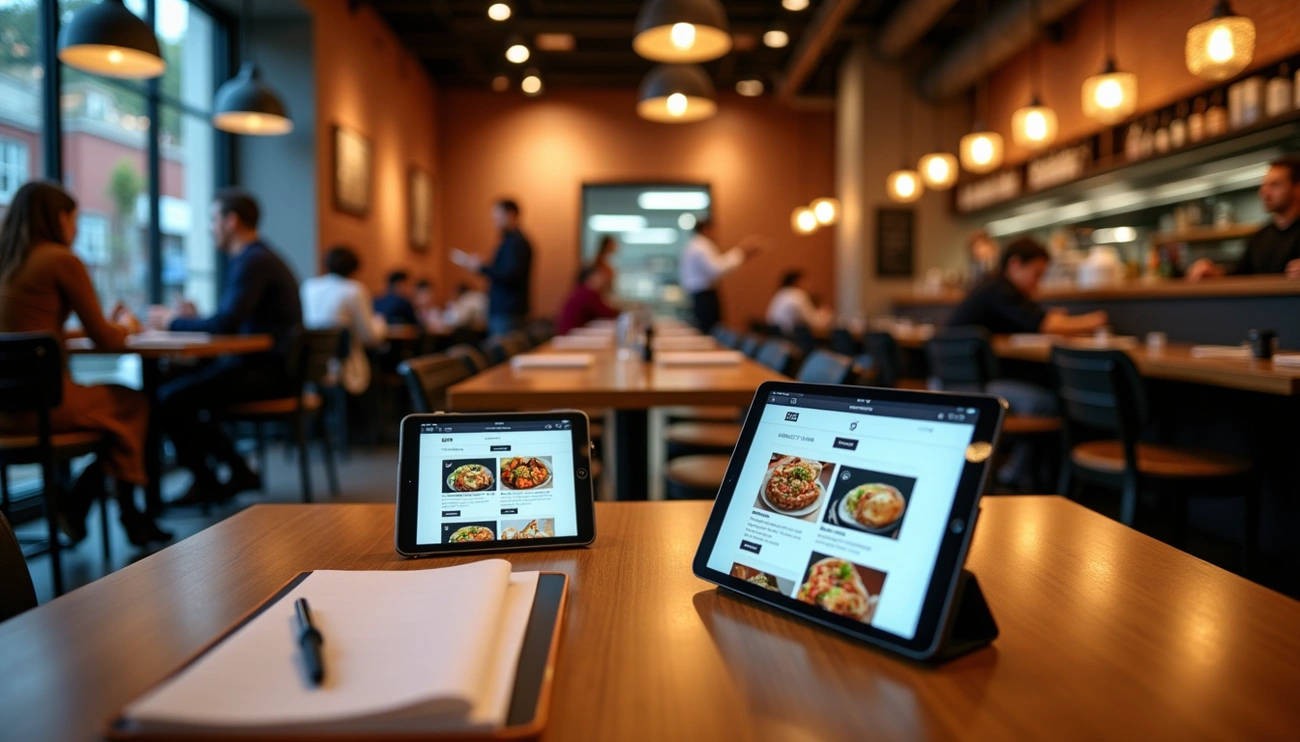
What is the average cost for a restaurant website that includes online ordering?

Last Updated November 3rd, 2025.
Online ordering dominates the takeout business, with 90% of orders now completed digitally. Restaurant websites that offer ordering capabilities have become crucial for business survival. Customer behavior shows a remarkable shift – direct orders from restaurant websites surged from 51% in 2019 to 82% by 2020. Restaurant owners must understand website costs before making this crucial business investment.
Building a website with online ordering capabilities comes with varying price tags. Website development ranges from free solutions to projects costing hundreds of thousands of dollars. Many restaurants choose to avoid third-party delivery platforms that take 25-30% of monthly revenue. Creating a custom online ordering system needs careful financial planning.
This detailed breakdown covers every aspect of restaurant website pricing. You’ll learn about DIY options, professional development costs, must-have features, and maintenance expenses. The online food delivery market reaches more than 173 million Americans, presenting huge opportunities for growth. TerraMyth helps restaurants direct their path toward launching successful websites that deliver results.
Average Cost Range for Restaurant Websites with Online Ordering

Image Source: Venngage
Your restaurant’s business growth depends on investing in a website. A clear understanding of the financial commitment will help you plan your budget for this digital asset.
Average Cost Range for Restaurant Websites with Online Ordering
Restaurant owners who want website options can choose from a wide range of prices. Your approach and requirements will determine the investment needed.
DIY vs Professional Builds: $0 to $150,000+
Building a website yourself versus hiring professionals shows a huge cost difference. DIY solutions might seem attractive at first, especially when you’re watching your budget. In spite of that, they often result in hidden expenses and missed opportunities later [1].
Self-built websites using template-based platforms can cost nothing (with free plans) up to $500 per month [2]. These options need your time instead of money, though most DIY builders need professional help for custom features eventually [2].
Professional services come at higher prices:
- Freelance developers: $2,000-$5,000 for simple websites and $10,000-$20,000 for advanced ones [3]
- Professional agencies: $3,000-$50,000, depending on complexity and features [4]
- Enterprise-level solutions: $10,000-$150,000+ for fully customized, feature-rich platforms [2]
Restaurants with professionally built websites see a 15-20% increase in revenue through their digital presence [5]. This makes it a profitable investment despite higher upfront costs.
Cost Factors: Design, Hosting, Features, and Maintenance
Your website’s overall cost depends on several elements:
Design Complexity: Simple, template-based designs cost between $0-$1,000, while custom designs from agencies range from $3,000 to $50,000 [4]. Custom designs match your brand’s identity exactly but need more investment.
Hosting and Domain: Domain registration costs $10-$50 yearly, while hosting ranges from $5-$150 monthly based on service level [3]. Smaller restaurants can use shared hosting plans ($2-$10 monthly), while busier sites benefit from VPS hosting ($20-$100 monthly) [3].
Online Ordering Integration: This vital component varies in price:
- Built-in ordering with website builders: $15-$30 monthly [2]
- Third-party ordering platforms: $50-$200 monthly [3]
- Custom ordering solutions: $500-$25,000 for development [3]
Maintenance Requirements: Your website’s yearly maintenance costs 15-20% of your initial investment [5]. This covers security updates, content management, and technical support to keep your site running well.
How Much Does It Cost to Build a Website? (2024 Standards)
Current data shows restaurant websites with online ordering fit these categories:
Basic Informational Sites: $1,500-$5,000 for a mobile-responsive website with simple pages and menu presentation [6]. These sites don’t have integrated ordering capabilities.
Standard Restaurant Websites with Ordering: $3,000-$15,000, including professional design, simple ordering functionality, and core features [5]. Independent restaurants commonly invest at this level.
Multi-Location Restaurant Platforms: $12,000-$20,000+ for websites that support multiple locations with integrated ordering systems [5]. These sites need extra development to handle location-specific content and menus.
Premium Enterprise Solutions: $25,000-$100,000+ for fully customized experiences with advanced features like CRM integration, loyalty programs, and live analytics [4].
Restaurant owners often wonder why websites cost so much. The answer lies in building secure, functional ordering systems that combine smoothly with point-of-sale platforms while giving customers an excellent experience.
TerraMyth understands these challenges and creates solutions that fit your restaurant’s needs and budget. You can schedule a virtual consultation with our team today to learn how we can improve your web presence and help you succeed in the online ordering market.
Breaking Down Website Design Costs

Image Source: Venngage
Your restaurant’s website esthetics and functionality shape how customers perceive your business. Design makes up much of your total website investment.
Breaking Down Website Design Costs
Design costs make up 20-25% of your original website expenses [7]. This makes budget planning vital.
Template-Based Design: $0 to $1,000
Restaurants with tight budgets can start with template-based designs. These pre-built frameworks help you create an online presence without spending too much upfront.
Template advantages include:
- Economical solutions (from free to affordable one-time fees) [1]
- Quick setup (as fast as 6 hours when needed) [8]
- Pre-built features like contact forms and galleries [1]
- Mobile responsiveness that works on all devices [1]
Platforms like WordPress ($20-$200), Squarespace ($18-$40 monthly), or Wix ($5-$35 monthly) [9] are available options to create your own website. These work best for restaurants that need quick setup with minimal investment.
Template limitations need careful thought. Your website might look generic since many businesses use the same templates [1]. On top of that, it’s hard or impossible to make extensive customizations [1]. This could limit your brand’s expression.
Custom Design by Agencies: $3,000 to $50,000
Professional custom designs need a bigger investment. Agency-created websites cost between $3,000 and $50,000 based on complexity, features, and functionality needs [8].
Custom design gives you several key benefits:
- Brand-focused esthetics that match your restaurant’s identity [8]
- Adaptable systems that grow with your business [1]
- Better architecture for SEO performance [1]
- Increased marketing results through great user experience [1]
Higher prices often bring better results. Restaurants with professional websites see 15-20% more revenue through their digital presence. This can justify the bigger upfront cost.
Logo Design and Branding Packages
A complete branding strategy can boost your digital presence. Professional branding packages often include:
- Logo design and visual identity development
- Menu layout and typography
- Interior branding elements [10]
- Brand design assets for online and offline use
Industry data shows professional photography and design boost customer engagement. Professional menu photos increase menu item interest by 30%. Well-designed menus keep visitors on your website 25% longer [7].
Quality visual assets pay off through better customer engagement and conversion rates.
Why Does a Website Cost So Much? (Design Complexity Explained)
Price variations often puzzle restaurant owners. Here’s what makes sophisticated designs cost more:
Custom websites need thorough research. Professional designers might spend days learning your business needs before creating any design elements [8]. This research helps create a website that supports your goals instead of just looking good.
Technical complexity adds to the cost. Custom sites need both front-end and back-end development skills, especially when connecting with point-of-sale systems or adding secure online ordering.
Well-laid-out websites grow with your business without needing a complete rebuild [8]. This saves you from extra redesign costs as your restaurant expands.
At TerraMyth, we create solutions that fit your restaurant’s needs and budget. Talk to our team today about building a website that showcases what makes your restaurant special.
Online Ordering System Integration Costs
Adding online ordering to your restaurant website is crucial. The right system can boost your revenue, but choosing poorly might lead to fees that cut into your profits.
Built-in Ordering with Website Builders (e.g. Wix, Squarespace)
Website builders give you affordable ordering options through their restaurant-focused apps and integrations. Wix Restaurants has three main apps—Menus, Orders, and Table Reservations. Their paid plans cost between $17 to $159 monthly with annual billing [6]. Customers can place orders ahead of time, and you can manage multiple locations from one dashboard.
Squarespace works with Square’s POS system. You’ll pay $19 upfront, which costs less than Wix’s $69 POS integration [6]. Squarespace also includes a menu creator that formats your menus beautifully without forcing customers to download PDFs.
GoDaddy works differently. They partner with services like ChowNow for ordering, which adds extra costs beyond your website subscription [6].
Third-Party Ordering Platforms: ChowNow, Toast, UpMenu
These platforms usually charge either commissions or subscription fees. Most apps have three fee types: setup ($0-$400), transaction (10%-40% per order), and optional marketing costs [11].
ChowNow asks for $99 monthly plus a $199 setup fee for each location [12]. Other services take bigger cuts—Grubhub wants 15-25% per order, while Uber Eats takes 15-30% if you use their drivers [12].
Toast takes a different approach. They combine online ordering with your POS system and charge monthly fees instead of commissions [12]. Restaurant owners keep more money this way since third-party delivery services usually take 25-30% monthly [12].
UpMenu comes with extras like loyalty programs and live reporting. Their Basic Plan starts with 2.99% commission [4].
Custom Ordering Systems: API Development and POS Integration
Custom systems give you more control but cost more upfront. You won’t pay commissions, and they work smoothly with your existing operations.
POS-integrated systems let you own your data. You’ll get customer details and order history directly [12]. This beats third-party vendors who rarely share this valuable information.
Menu updates become easier too. Changes show up online right away without extra fees [12] when ordering is part of your POS system. Third-party vendors often limit menu changes or charge more for updates.
E-commerce Add-ons: WooCommerce, Shopify, Square Online
E-commerce platforms work well for restaurant ordering. Shopify plans start at $29 monthly with annual billing. You’ll avoid transaction fees by using their payment system [6].
WooCommerce can turn your WordPress site into an ordering system with the “Restaurant for WooCommerce” extension. You can customize menus, delivery options, and set preparation times and minimum order amounts [5].
Square Online connects directly to Square’s POS. This creates smooth operations between online and in-store orders [3]. Sales, deliveries, and pickup orders sync automatically with your POS and update inventory live [3].
Choosing the right ordering system means balancing startup costs, ongoing fees, and control over customer data. At TerraMyth, we know these systems inside out and can help find an affordable solution that fits your restaurant. Let’s talk about making your website’s ordering system work better while keeping costs down.
Technical Steps and Development Requirements

Image Source: MongoDB
A functional restaurant website with online ordering needs multiple technical components working together. These elements shape your customers’ experience and determine your development costs.
Front-End Development: HTML, CSS, JavaScript
Your website’s visual interface comes to life during front-end development. Customers interact with this part directly. This vital stage usually takes two to six weeks and costs $10,000-$15,000 [13]. Three main technologies power the front-end:
- HTML (structure): Creates the framework of your website and organizes content like menu items and sections
- CSS (styling): Controls visual elements like colors, fonts, and layout spacing that match your brand
- JavaScript (interactivity): Powers dynamic elements like order customization options and live cart updates
Your website must work well on mobile devices since most customers order through smartphones. Good front-end development helps your website adjust naturally to different screen sizes and devices [14].
Back-End Setup: Databases, CMS, and Hosting
Behind the scenes, the back-end handles order processing and data storage. This phase typically takes three to eight weeks and costs between $10,000-$15,000 [13]. Here are the key components:
Your Content Management System (CMS) lets you update menus and content without a developer’s help. You can choose from free platforms like WordPress or paid solutions costing up to $500 [15].
Server space for your website files comes from web hosting, which costs $5-$30 monthly [15]. You’ll also need domain registration ($1-$20 yearly) and SSL certificates ($10-$300 yearly) [16].
Custom Software Features: Loyalty Programs, QR Menus
Additional features can improve customer experience and make operations more efficient. Here are some popular additions:
QR code menus are becoming increasingly popular in restaurants. They speed up ordering, reduce staff workload, and give customers more control. Each table gets a unique code that leads to your online menu [17].
Loyalty programs give repeat customers points, discounts, or special offers. These systems help increase customer retention and online food orders [17], though they need more development work and investment.
Security Layers: SSL, PCI Compliance, and User Data Protection
Strong security protects your business and customers alike. Data breaches in hospitality cost nearly $3 million on average in 2022 [18]. Security investment is not optional.
PCI DSS compliance must be in place for credit card processing. These guidelines ensure secure payment processing and help prevent fraud [14].
SSL encryption keeps data safe as it moves between customers and your website. Many hosting companies include SSL certificates in their packages [9].
Secure payment gateways like Stripe or PayPal offer strong security features, including encryption and fraud detection [14]. They usually charge 2-3% per transaction plus $20-$50 monthly fees [19].
Building a technically sound restaurant website needs expert knowledge. TerraMyth understands these requirements and can help you make smart technical decisions while keeping development costs in check. Talk to our team today about your restaurant’s technical needs in a virtual consultation.
Ongoing Costs: Hosting, Maintenance, and Support
Image Source: Bluehost
Your restaurant website’s launch is just the start of your digital experience. The website’s total ownership cost includes significant ongoing expenses you need to consider.
Website Hosting: Shared vs Managed ($5–$150/month)
Hosting plan prices vary based on performance requirements. Small restaurants with moderate traffic can opt for shared hosting at $2-$15 per month [2]. Busier websites need VPS hosting that costs $20-$100 monthly [2] and provides dedicated resources for consistent performance during peak hours.
Restaurant chains managing multiple locations can benefit from dedicated hosting at $80-$500 monthly [2]. WordPress hosting optimized for restaurant websites costs $3-$25 per month [20] and includes automatic updates with better security features.
Domain Name and SSL Certificate Costs
A domain name usually costs $10-$20 annually [21]. Specialty extensions like .restaurant are premium options at $61 per year [22], with renewal fees up to $160 annually [22]. These unique domains help customers identify your business type immediately.
SSL certificates protect customer data and range from $7 to $860 annually [23] based on security requirements. Most hosting providers include simple SSL certificates free with their packages [2]. Restaurants that process sensitive payment data might need higher security certificates at $50-$100 yearly [23].
Maintenance Plans: Updates, Backups, and Bug Fixes
Annual maintenance costs about 15-20% of your original website investment [7]. This essential service prevents problems that can get pricey later. The maintenance package includes:
- Regular software updates and security patches
- Daily or weekly website backups ($2-$20 monthly [23])
- Technical support ($2-$300 monthly [23])
- Error repairs and bug fixes
Professional maintenance services cost $50-$500 monthly [21]. The price depends on your website’s complexity and required response time. Developers charge $100-$200 hourly [24] for specialized tasks beyond regular maintenance.
Business Email and App Integrations
Your ongoing expenses include professional email hosting and various app integrations that boost your website’s functionality. The market offers free to premium plugins and extensions that can cost hundreds annually [2].
TerraMyth offers detailed website hosting and maintenance packages specifically designed for restaurant websites with online ordering features. Our team can help optimize your website’s performance while keeping costs low. Book a virtual consultation with us today.
What Makes a $100,000 Website Different from a $1,000 One?
The cost gap between simple and premium restaurant websites shows what value each brings to your business. These price differences make sense once you see what each tier offers.
Custom UX/UI Design and Branding
Premium websites showcase unique designs that match your restaurant’s personality perfectly. Template-based solutions can’t compare to designs that start with deep research into your brand [25]. Studies show that professional photos and custom visuals on these sites boost menu item interest by 30% [26].
Advanced Features: Multi-location Support, CRM, Analytics
High-end websites come with powerful dashboard systems that let you handle orders, update menus and check detailed reports [21]. These custom management tools run $10,000-$25,000 [21] but give you complete control of your digital operations. Your site captures customer data directly, unlike delivery platforms that keep this valuable information to themselves.
Scalability and Performance Optimization
Premium websites prepare your business for growth. They use horizontal scalability—adding more machines or nodes to spread user traffic [27]. Your site stays fast and reliable even during unexpected busy periods. This smart design prevents your business from needing expensive updates later [28].
Dedicated Support and SLA Agreements
Quality websites include Service Level Agreements that promise 99.99% uptime [29] with specific fix-time guarantees. Enterprise support connects you to dedicated account managers [30] right away if problems occur.
TerraMyth offers free business consultations to help improve your online presence.
Conclusion
A restaurant website with online ordering is a vital investment in today’s digital-first world. This piece shows how costs can vary from zero for DIY solutions to $150,000 for enterprise-level implementations.
Your restaurant’s needs and growth goals should guide your choices. Small restaurants can start with template designs and third-party ordering platforms to keep costs low while building their online presence. Larger restaurants or growing chains see better results with custom development. Professional websites boost revenue by 15-20%, which makes the higher upfront costs worth it.
The best approach finds the right balance between your current budget and future revenue potential. Skipping key features like mobile-friendly design, secure payments, or good user experience can hurt your business. These basics affect how happy customers are and how often they order.
The costs after launch are just as important as the development costs. You’ll need to set aside 15-20% of your initial investment each year for maintenance, hosting, and support. This money keeps your website running smoothly and protects your investment.
Professional development gives restaurants clear advantages through branded design, flexible systems, and integrated tools that avoid third-party commission fees. Higher customer retention and larger orders make this investment worthwhile.
Talk to TerraMyth today about improving your online presence. Our team creates economical restaurant websites that bring exceptional returns while keeping costs down. We know what challenges restaurants face and can help you build a profitable online ordering system.
Key Takeaways
Restaurant website costs with online ordering vary dramatically based on your approach and requirements, from free DIY solutions to $150,000+ enterprise systems.
• Budget ranges span widely: DIY templates cost $0-$1,000, professional builds range $3,000-$50,000, while enterprise solutions reach $150,000+
• Professional websites generate 15-20% more revenue than basic alternatives, often justifying higher upfront investment through increased customer engagement
• Ongoing costs add 15-20% annually of initial investment for hosting, maintenance, SSL certificates, and technical support
• Third-party platforms take 25-30% commission per order, making integrated ordering systems more profitable long-term despite higher development costs
• Mobile optimization is essential as most customers now order via smartphones, requiring responsive design across all price tiers
The key to success lies in balancing immediate budget constraints with long-term revenue potential. While template solutions offer quick market entry, professionally built websites with integrated ordering systems typically deliver superior returns through enhanced customer experience, data ownership, and elimination of commission fees that eat into profit margins.
FAQs
Q1. What is the typical cost range for a restaurant website with online ordering? The cost can vary widely, from $0 for DIY solutions to over $150,000 for enterprise-level implementations. A basic informational site might cost $1,500-$5,000, while a standard restaurant website with ordering functionality typically ranges from $3,000-$15,000.
Q2. Is it worth investing in a professionally built website for my restaurant? Yes, it can be. Professionally built websites typically generate 15-20% more revenue compared to basic alternatives. While the upfront cost is higher, the increased customer engagement and functionality often justify the investment for many restaurants.
Q3. What ongoing costs should I expect for my restaurant website? Ongoing costs typically add about 15-20% of your initial investment annually. This covers expenses like hosting (ranging from $5-$150/month), domain registration, SSL certificates, regular maintenance, and technical support.
Q4. Should I use third-party ordering platforms or integrate my own system? While third-party platforms offer quick setup, they often charge 25-30% commission per order. Integrating your own ordering system, though more expensive initially, can be more profitable long-term by eliminating these commissions and allowing you to retain customer data.
Q5. How important is mobile optimization for a restaurant website? Mobile optimization is crucial. With most customers now ordering via smartphones, your website must be responsive and function well on all devices. This requirement applies across all price tiers of website development.
References
[1] – https://www.cohdigital.io/blog/custom-web-design-vs-templates-a-cost-benefit-analysis-for-businesses
[2] – https://www.forbes.com/advisor/business/website-hosting-cost/
[3] – https://gfs.com/en-us/ideas/which-e-commerce-platform-best-your-restaurant/
[4] – https://www.upmenu.com/blog/best-restaurant-website-builders/
[5] – https://woocommerce.com/products/restaurant-for-woocommerce/
[6] – https://www.websitebuilderexpert.com/website-builders/restaurant/
[7] – https://nilead.com/article/understanding-restaurant-website-costs
[8] – https://nilead.com/article/website-design-template-vs-custom-build
[9] – https://appwrk.com/restaurant-website-design-cost
[10] – https://www.logodesignnyc.com/restaurant-branding-design/
[11] – https://www.touchbistro.com/blog/preparing-your-restaurant-for-an-online-ordering-system/
[12] – https://pos.toasttab.com/blog/on-the-line/true-cost-of-online-ordering?srsltid=AfmBOoqPreC251H5sDNdmHXLfWoF8pHbzkJW6Jngs4lkv0RtOpiIkkHy
[13] – https://imaginovation.net/blog/website-development-cost-complete-guide/
[14] – https://www.restroworks.com/blog/how-to-create-online-ordering-for-restaurant/
[15] – https://www.webyking.com/blog/how-much-does-it-cost-to-build-a-restaurant-website/
[16] – https://www.restaurant-website-builder.com/restaurant-website-cost
[17] – https://www.upmenu.com/blog/how-to-set-up-online-ordering-system/
[18] – https://sachetta.com/blog/restaurant-cybersecurity-costly-risks-for-restaurant-owners
[19] – https://www.cisin.com/coffee-break/cost-to-build-a-restaurant-website.html
[20] – https://www.hostinger.com/tutorials/how-much-does-website-hosting-cost
[21] – https://cartcoders.com/blog/shopify-development/restaurant-website-cost-guide/
[22] – https://www.gandi.net/en-US/domain/tld/restaurant
[23] – https://www.webyking.com/blog/website-maintenance-cost/
[24] – https://www.dinevate.com/pages/restaurant-website-cost-breakdown-what-to-expect-in-2025/
[25] – https://shivlab.com/blog/restaurant-website-design-and-development-costs-affordable-solutions/
[26] – https://www.evergreenhq.com/blog/restaurant-website-design-cost-whats-worth-paying-for/
[27] – https://younetsocial.com/scalability-performance-optimization/
[28] – https://fullscale.io/blog/software-scalability/
[29] – https://us.ovhcloud.com/legal/sla/dedicated-servers/
[30] – https://www.easyedge.io/sla-pricing/


